
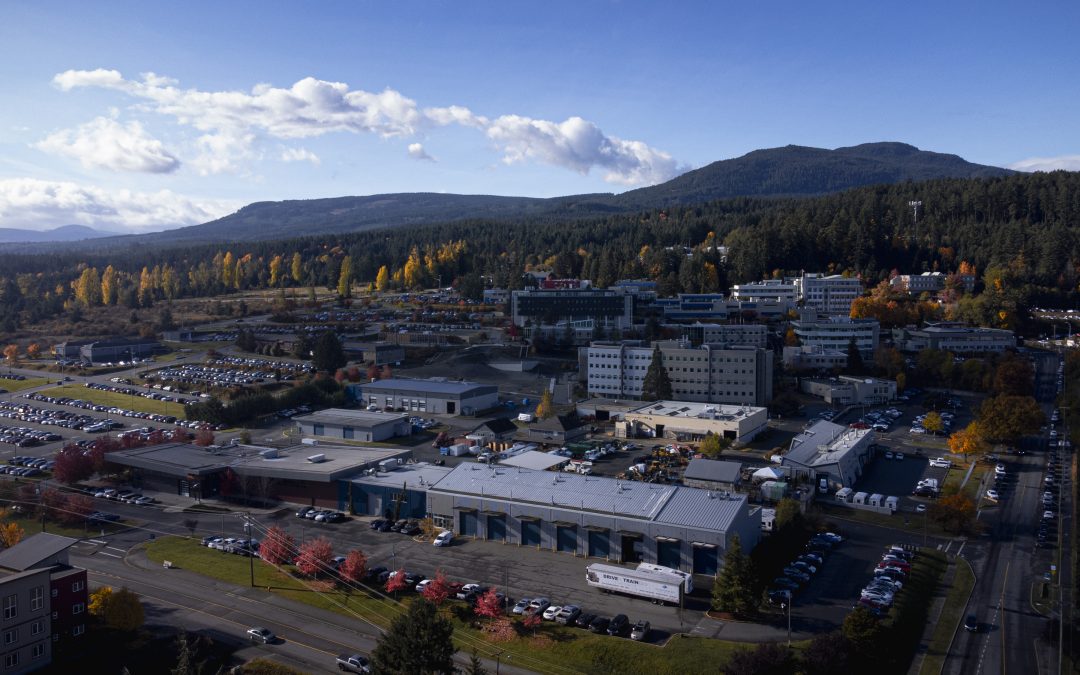
In the winter semester 2025/26, I (Gunnar Hartmann) had the opportunity to spend a semester abroad at Vancouver Island University (VIU) in Nanaimo on Vancouver Island, Canada. As outlined in the BioGeoSciences module handbook, the 5th semester can optionally be completed abroad—a great opportunity to break out of the routine in Koblenz and experience something completely different.
At VIU, I took three courses: GIS, Biogeography, and Habitat Management. These were credited as GIS (Module 20), Ecosystems and Climate Change (Module 16), and an elective module (Module 23). In total, I earned 18 ECTS—technically not enough for a full semester, but since I had already completed my other elective modules beforehand, this was not an issue. It is important to clarify course recognition in advance. Depending on your progress in your studies, you may be able to have more or fewer courses recognized. Courses such as Statistics, Environmental Chemistry, Ecotoxicology, Zoology, or Physics/Chemistry can also be taken, as long as the ECTS credits roughly match. My main goal was to benefit from the exciting and practice-oriented courses offered at VIU and have them recognized. I would have loved to take even more, such as Wildlife Management, Wildlife Techniques, or Ornithology! So, if you are at the beginning of your studies, it might be worth considering which modules you want to complete abroad. For a good work-life balance, I recommend taking 3–4 courses.
Teaching at VIU is highly project-based and quite different at first: regular small assignments, group work, and presentations largely replace the traditional “final exam phase.” In particular, attending lectures in English taught by native speakers was very enriching and significantly improved my academic English.
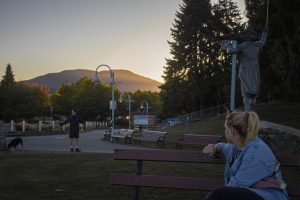
The campus is located close to forests, the coast, and mountains—perfect for exploring the surroundings by bike or on foot after classes. Weekend trips to beaches, temperate rainforests, and viewpoints where you can spot whales, dolphins, orcas, sea otters, and more were just as much a part of my experience as lectures and lab work. This combination of academic development, international perspective, and immersive nature experiences has sustainably strengthened my motivation for ecological and conservation-related topics.
From an organizational perspective, the stay was well integrated through a Learning Agreement and the recognition process at the University of Koblenz. The financial costs, which can be managed with suitable funding opportunities, were covered through support from the DAAD‘s PROMOS program and international BAföG.
Tip: If you are interested in academic inspiration, English-language lectures, and the unique natural environment of Vancouver Island, you should definitely consider doing your 5th semester abroad. Interested? You can find more information on the International Student Office website, or feel free to contact me via email at gunnarhartmann@uni-koblenz.de